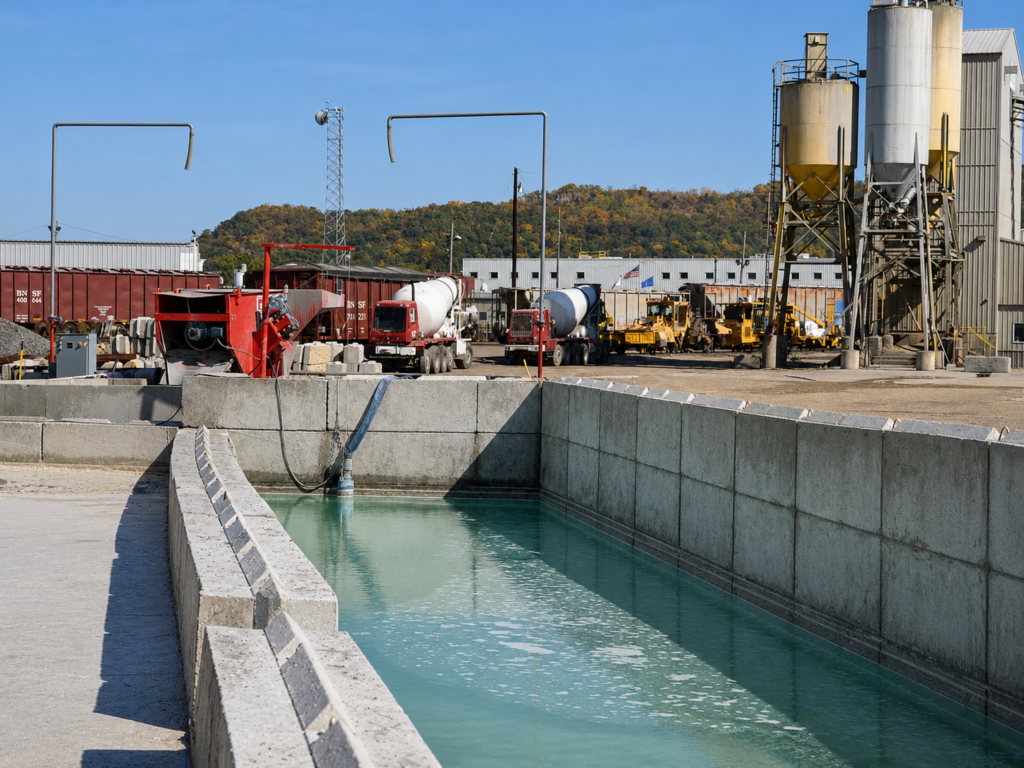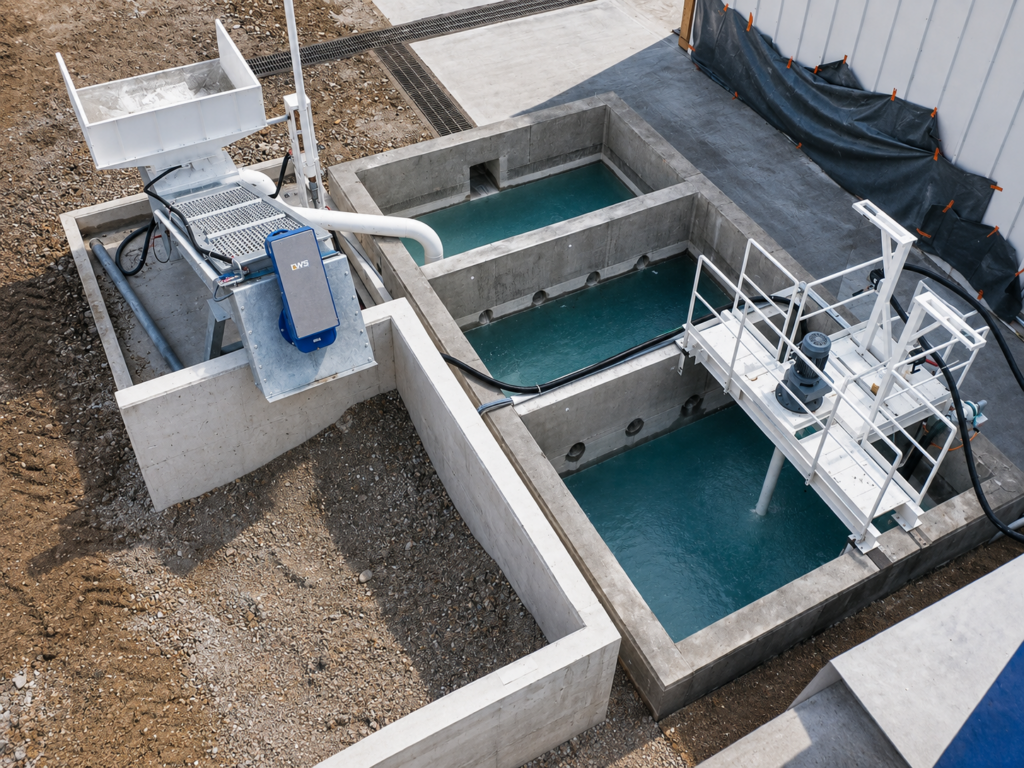


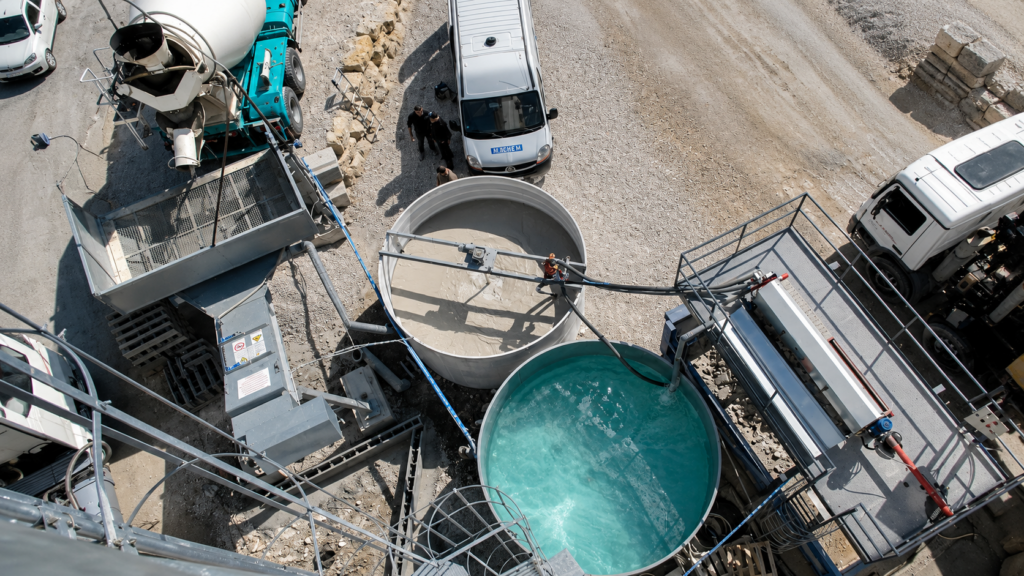
The circular economy is now an established reality in the concrete sector as well. Among the practices that have gained increasing adoption in recent years is the reuse of recycled water from washing concrete mixer trucks, pumps, and batching plants. A choice that significantly reduces potable water consumption and limits wastewater production, but requires technical expertise, constant monitoring, and proper mix design.
At EKAN, we address this issue daily by collaborating with batching plants and concrete producers who wish to increase the sustainability of their production without compromising the quality, performance, and reliability of the concrete.
Recycled water is not simply “dirty water.” It is a suspension containing fine particles of cement, filler, very fine sand, and admixture residues. Its composition varies continuously depending on the concrete produced, the frequency of washing, the recovery system installed, and the residence time in settling tanks. This variability represents the main aspect to control.
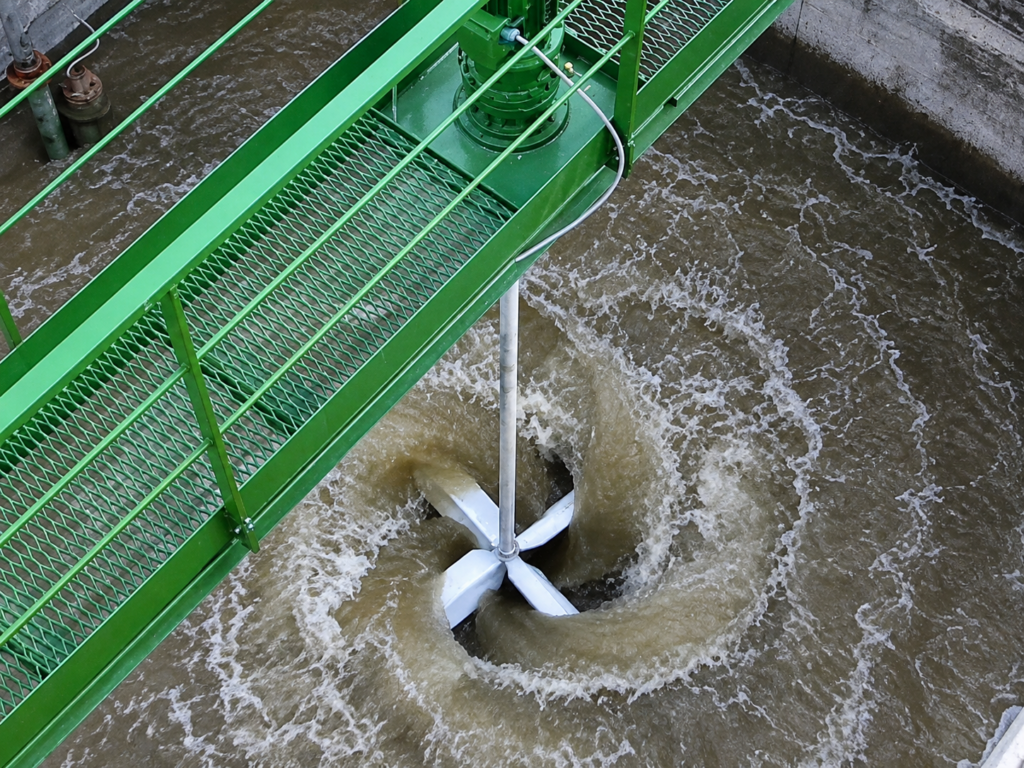
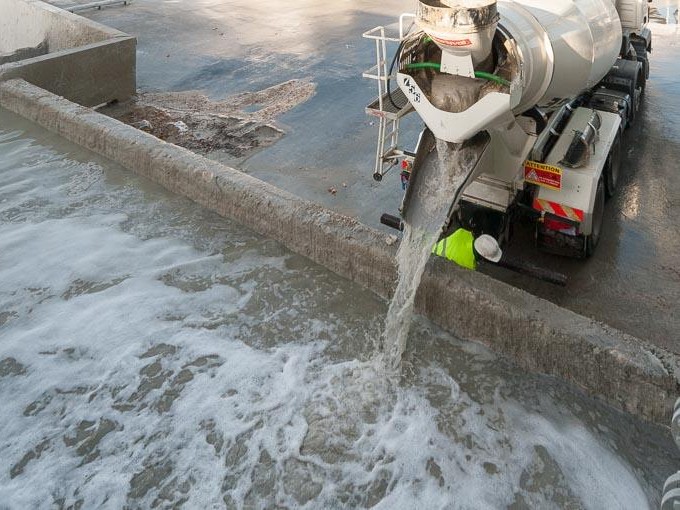
When properly managed, recycled water offers numerous advantages. It reduces potable water consumption, limits wastewater disposal costs, valorizes materials that would otherwise be considered waste, and contributes concretely to improving the plant’s environmental performance. For many companies, it represents one of the most effective interventions today for reducing the environmental impact of the entire production process.
For these benefits to translate into improved industrial efficiency, however, it is necessary to understand the effects that such water can have on the behavior of fresh and hardened concrete.
The presence of suspended solid particles modifies the actual water/cementitious material ratio available, influencing consistency, viscosity, and pumpability. If the concentration of solids varies from one batch to another, the behavior of the concrete can also become less predictable, with consequences on workability, mix stability, and slump retention over time.
Setting times can also vary. Already hydrated cement particles and the high alkalinity of the water can accelerate or modify hydration phenomena, while any admixture residues present in the water can alter the behavior of the new superplasticizer introduced into the mix. It is precisely in these situations that the differences emerge between a simply functional formulation and a truly stable mix under daily production conditions.
For this reason, it is not sufficient to decide to use recycled water: one must learn to manage it.
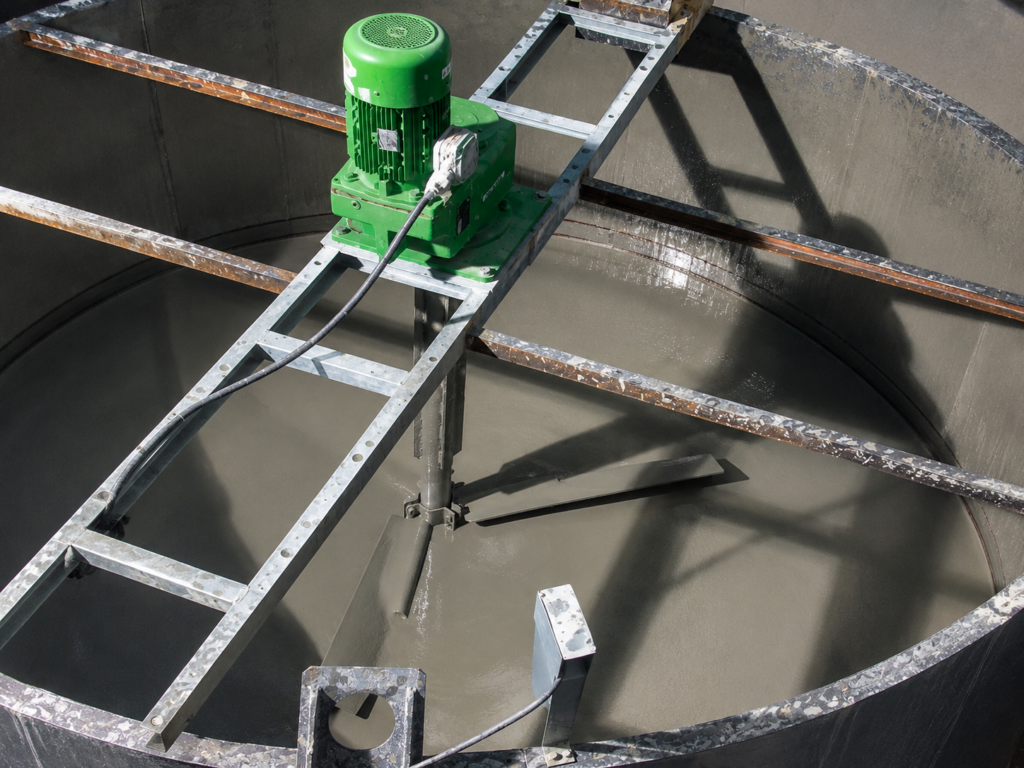
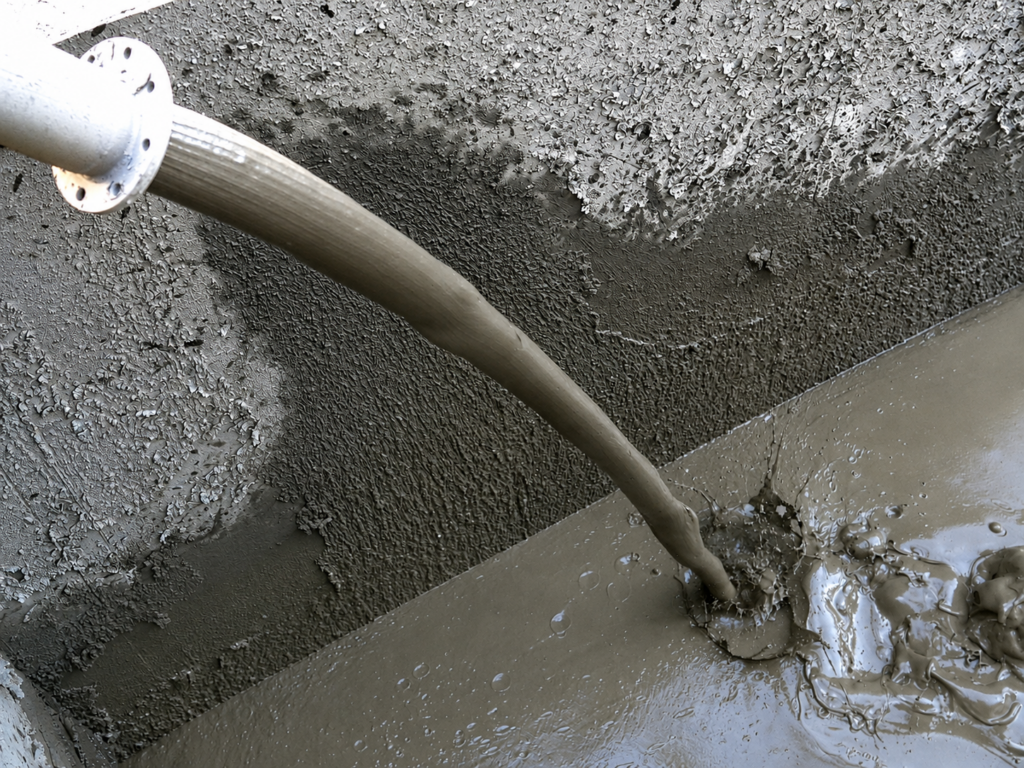
The most important parameters to monitor are density, suspended solids content, pH, temperature, and suspension homogeneity. Regular monitoring allows maintaining consistent water quality and quickly correcting any anomalies before they affect the concrete produced.
The tank agitation system also plays a fundamental role. Without adequate agitation, solids tend to settle, causing the concentration to vary significantly between the first and last batch of the day. The result is less uniform production that is more difficult to control.
The use of recycled water also requires specific design of chemical admixtures. Not all superplasticizers react the same way in the presence of high quantities of fine particles or residues from previous productions. Compatibility among cement, recycled water, and admixture therefore represents one of the most delicate aspects of the entire mix.
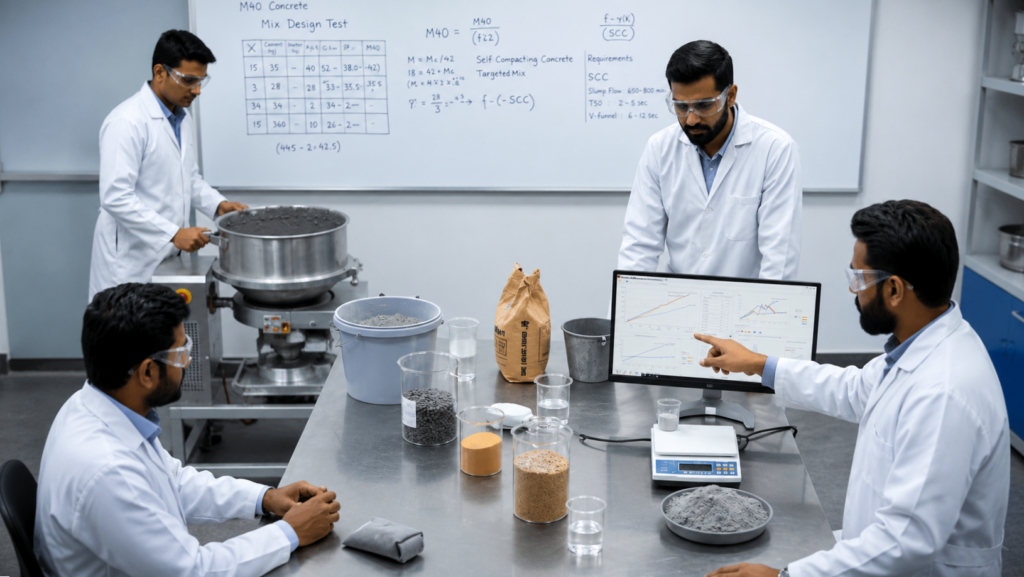
Experience shows that the best performance is achieved when the mix design is developed from the outset considering the use of recovered water, rather than simply substituting a portion of clean water without further verification. Through preliminary testing, periodic monitoring, and proper selection of admixtures, it is possible to obtain perfectly workable, reliably performing concrete that meets design requirements even with high percentages of recycled water.
Sustainability today does not simply consist of reusing a resource, but of doing so while maintaining high quality and production standards. This is precisely the approach we adopt every day at EKAN: analyzing the actual behavior of mixes, identifying the variables that influence production, and developing solutions capable of combining performance, reliability, and environmental responsibility.
Because well-managed recycled water does not represent a compromise, but a technical resource that, when properly controlled, can simultaneously improve sustainability, production efficiency, and concrete quality.