



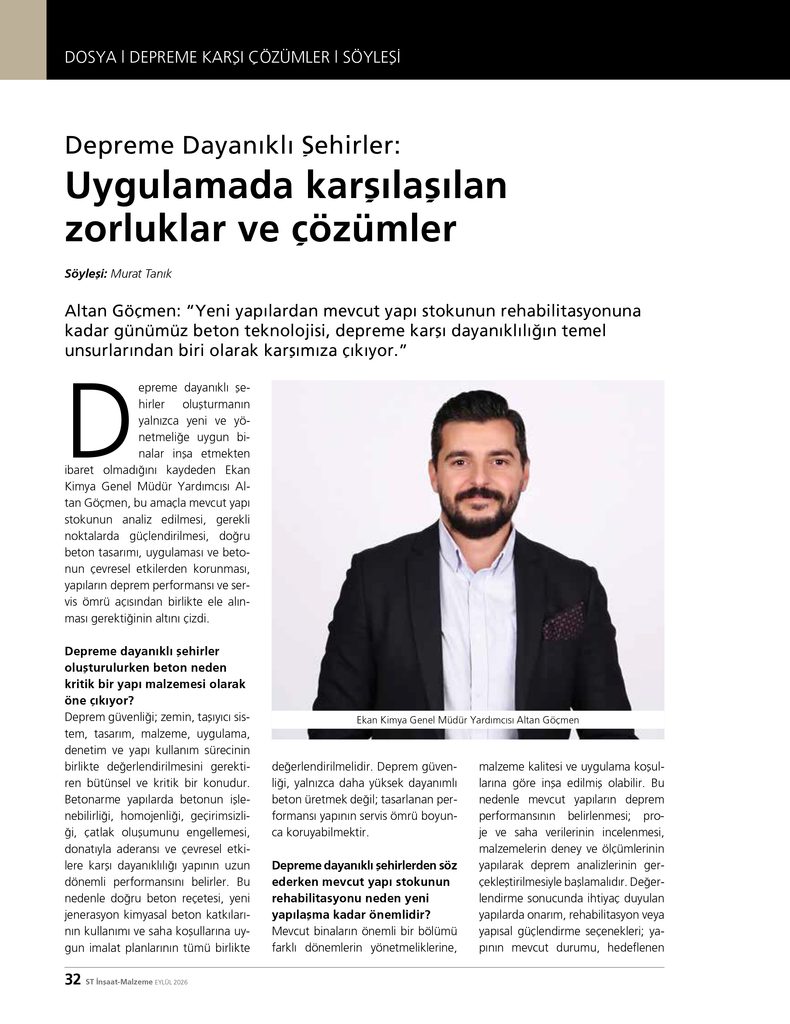
From new constructions to the rehabilitation of existing building stock, modern concrete technology stands out as one of the fundamental elements of earthquake resilience.
Creating earthquake-resilient cities is not solely about constructing new, code-compliant buildings. The analysis of existing building stock, strengthening where necessary, correct concrete design, application, and protection of concrete from environmental impacts must be addressed collectively for structural earthquake performance and service life.
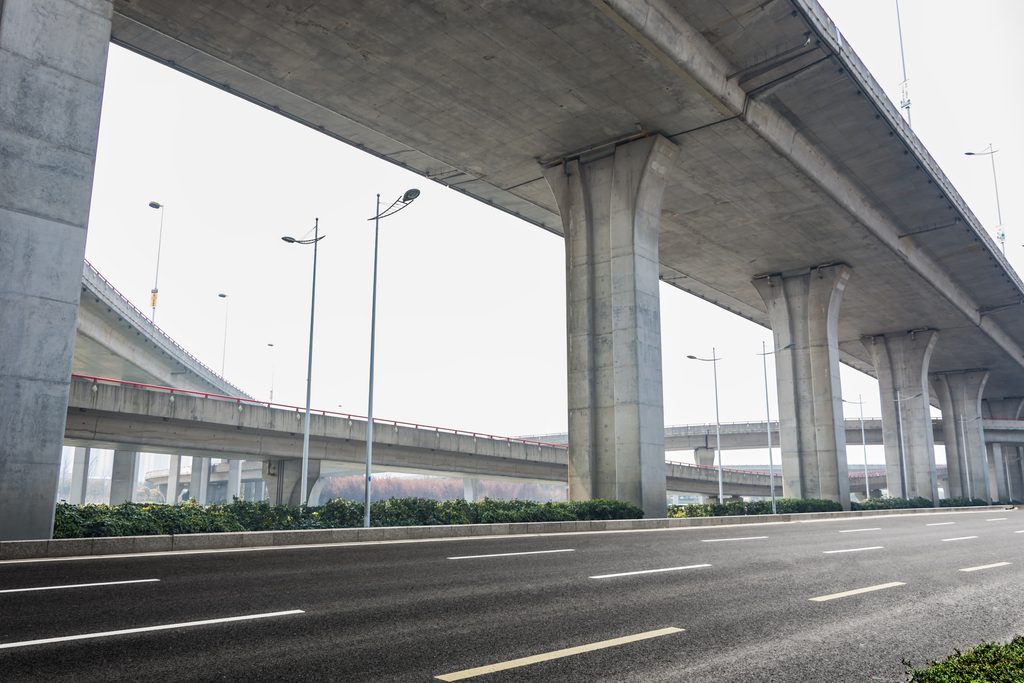
Why does concrete stand out as a critical building material in the creation of earthquake-resilient cities?
Earthquake safety is a holistic and critical issue that requires the combined evaluation of the ground, structural system, design, materials, application, supervision, and building use process.
In reinforced concrete structures, the workability, homogeneity, impermeability, crack prevention, bond with reinforcement, and resistance to environmental effects of concrete determine the long-term performance of the structure.
Therefore, the correct concrete mix design, the use of new generation chemical concrete admixtures, and manufacturing plans suitable for site conditions must all be evaluated together.
Earthquake safety is not just about producing higher strength concrete; it is about maintaining the designed performance throughout the service life of the structure.
When we talk about earthquake-resilient cities, why is the rehabilitation of existing building stock as important as new construction?
A significant portion of existing buildings may have been constructed according to regulations, material quality, and application conditions of different periods.
Therefore, determining the earthquake performance of existing structures should begin with examining project and site data, conducting material tests and measurements, and performing earthquake analyses.
Based on the evaluation, repair, rehabilitation, or structural strengthening options for structures in need should be determined by considering the current state of the structure, targeted earthquake performance, intended use, and economic/technical conditions.

Why is concrete quality critical in structural strengthening applications, and what challenges are encountered?
As a result of a structure’s earthquake performance analyses, strengthening needs may arise in different structural elements.
Strengthening performed on columns, beams, shear walls, foundations, or connection areas may each require different details and applications.
The bond between existing concrete and new construction, reinforcement layout, cross-section geometry, load transfer, and strength development characteristics of the new concrete are critical parameters in this process.
In urban projects, logistical conditions such as confined spaces, traffic, pump and mixer access, continued use of the existing structure, and timely concrete supply also directly affect the success of strengthening.
Which approach stands out in solving application and logistical challenges?
Following structural static and earthquake analyses, a detailed application program should be created; casting sequence, concrete supply plan, pump placement, traffic and access conditions, waiting times, temperature, and environmental conditions should be evaluated in advance.
To ensure high performance of concrete on site, the mix design should be optimized according to application conditions.
Workability, strength, and service life should be balanced with water-reducing, set-regulating, and permeability-reducing admixtures to minimize performance losses.
Why should curing, crack control, and waterproofing be evaluated together for maximum concrete performance?
The concrete’s achievement of its targeted performance also depends on post-production application processes.
Effective curing supports strength development while reducing early-age water loss and shrinkage cracks.
In addition to curing, structural fiber reinforcements also increase the ductility and energy absorption capacity of concrete by maintaining post-crack stress transfer.
Alongside curing and crack control, crystalline waterproofing admixtures can also be included in the system for low-permeability concrete.
When all these technical aspects are brought together, how can earthquake-resilient sustainable structural performance be achieved?
A single product or application method is not sufficient for earthquake safety.
Successful results are achieved by managing correct structural analysis, appropriate concrete design, and controlled and technical application steps together.
Especially in structural strengthening, the compatibility of new concrete with the existing structure, load transfer, and application suitable for site conditions are critically important.
Therefore, laboratory verification and field application must be evaluated together.
The work carried out by EKAN KİMYA with four production facilities in Turkey (Istanbul and Giresun) and globally (Italy and Saudi Arabia), along with its Global R&D Unit in Istanbul, enables the development and field verification of special solutions for various infrastructure and superstructure projects.
Optimizing concrete mix designs with a “Tailor-Made” approach, identifying performance-enhancing chemical solutions, and providing engineering support are important components of EKAN KİMYA’s culture.
The Future of Earthquake-Resilient Cities
The future of earthquake-resilient cities lies not only in producing new structures but also in correctly analyzing the existing building stock, strengthening necessary structures, and ensuring the performance of materials used under real site conditions.
Correct analysis, correct concrete, correct application, and continuous quality improvement form the foundation of safe and long-lasting cities.